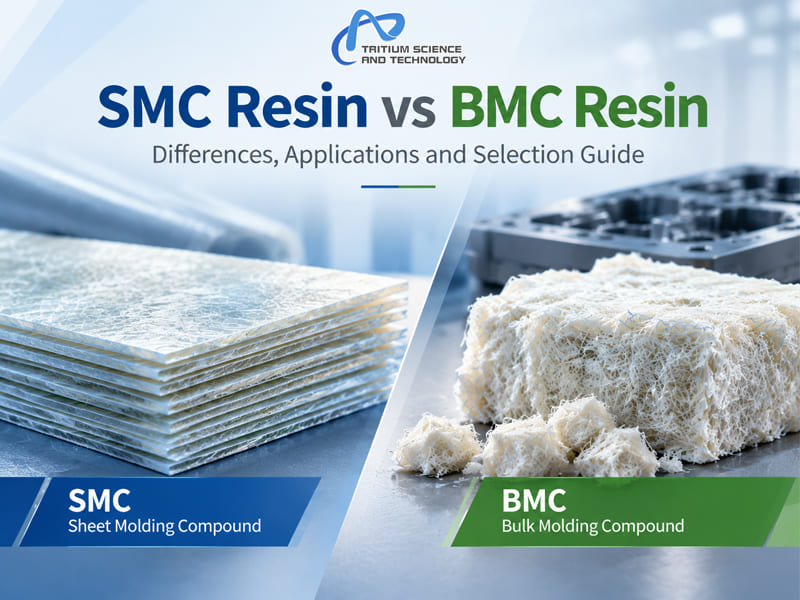

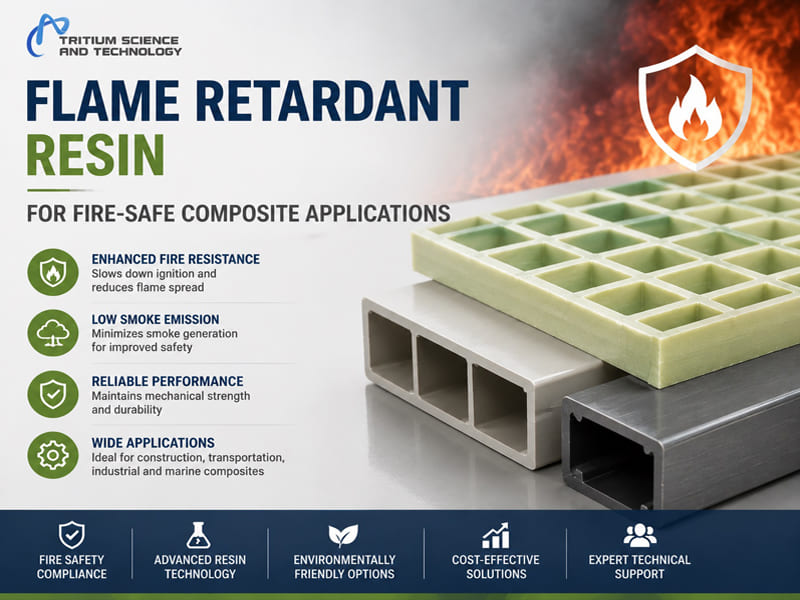
Flame retardant resin plays an essential role in developing safer composite materials for applications where fire performance is critical. By improving flame resistance, reducing smoke generation, and maintaining mechanical strength, flame retardant unsaturated polyester resin helps manufacturers produce reliable FRP products for construction, transportation, industrial equipment, and infrastructure projects. This guide explains the key properties, technologies, and application considerations of flame retardant resin, including fire resistance, processing performance, and material selection. As an experienced China UPR resin manufacturer, ZhongTritium provides customized resin solutions for FRP pipes, tanks, gratings, marine composites, and other high-performance composite applications.
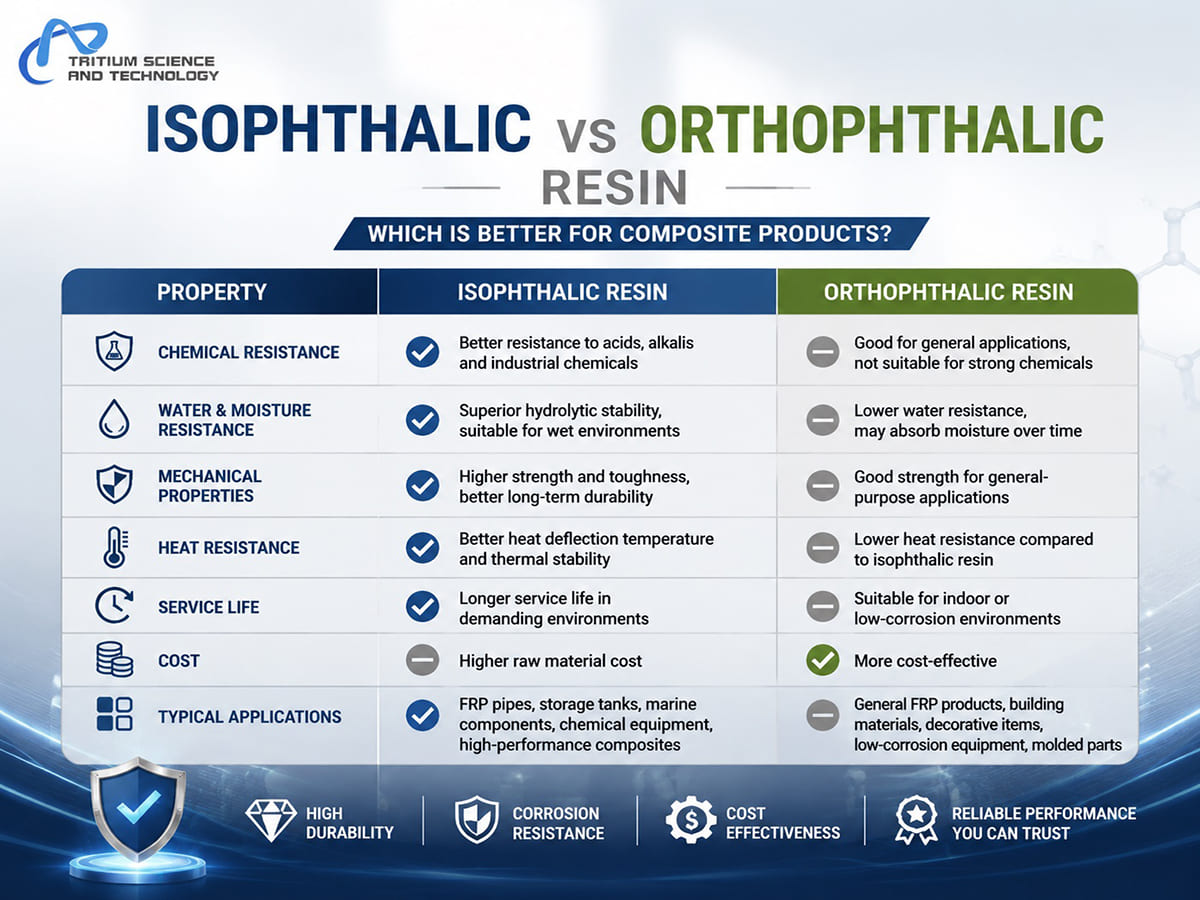
Isophthalic and orthophthalic polyester resins are two widely used unsaturated polyester resin systems in composite manufacturing. While orthophthalic resin provides a cost-effective solution with good processing performance, isophthalic resin offers improved chemical resistance, water resistance, durability, and long-term performance for demanding applications. This guide explains the key differences between isophthalic and orthophthalic resin, helping manufacturers select the right resin system for FRP pipes, tanks, marine composites, and industrial applications. As an experienced China UPR resin manufacturer, ZhongTritium provides customized resin solutions with reliable quality and technical support for global composite manufacturers.
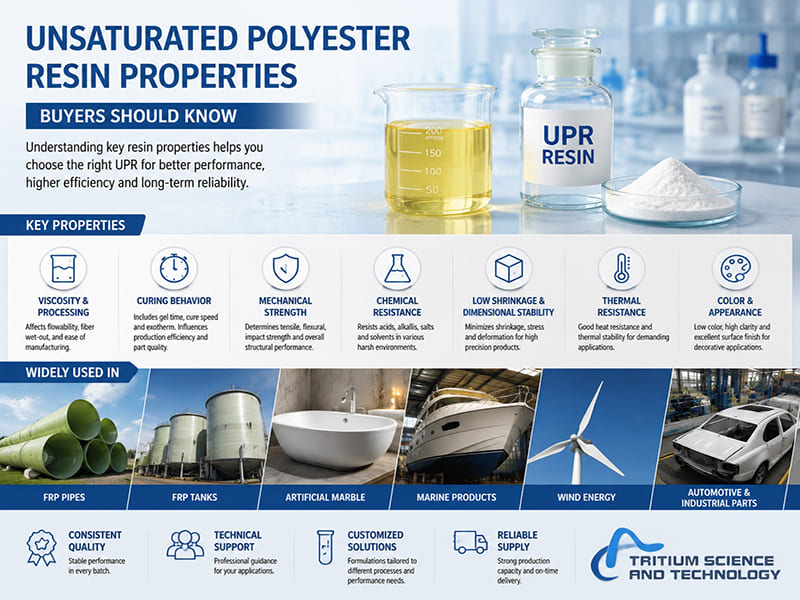
Unsaturated polyester resin (UPR) is one of the most widely used thermosetting resins in composite manufacturing. Its properties, including viscosity, curing behavior, mechanical strength, chemical resistance, shrinkage control, and thermal performance, directly influence the quality and durability of finished composite products. Understanding these key characteristics helps manufacturers select the right resin system for applications such as FRP pipes, tanks, artificial marble, marine products, and industrial components. As an experienced China UPR resin manufacturer, ZhongTritium provides customized unsaturated polyester resin solutions designed for different production processes and performance requirements, helping customers improve efficiency, reduce defects, and achieve reliable long-term results.
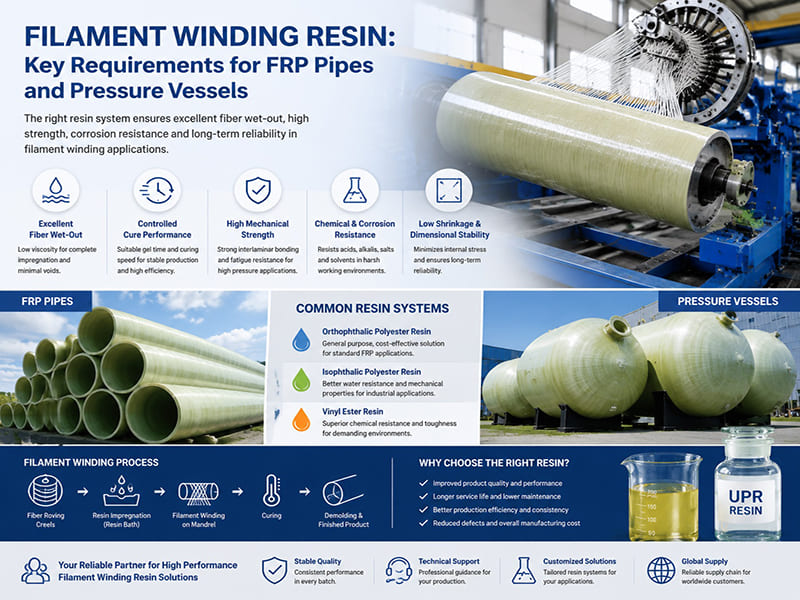
Filament winding is a widely used manufacturing process for producing high-performance FRP pipes, pressure vessels, and composite structures. The selection of filament winding resin directly affects fiber wet-out, curing performance, mechanical strength, chemical resistance, and long-term durability. This guide explains the key resin requirements for filament winding applications and how different resin systems perform in demanding industrial environments. As an experienced China UPR resin manufacturer, ZhongTritium provides customized unsaturated polyester resin solutions designed to help composite manufacturers improve production efficiency, reduce defects, and achieve reliable product performance.
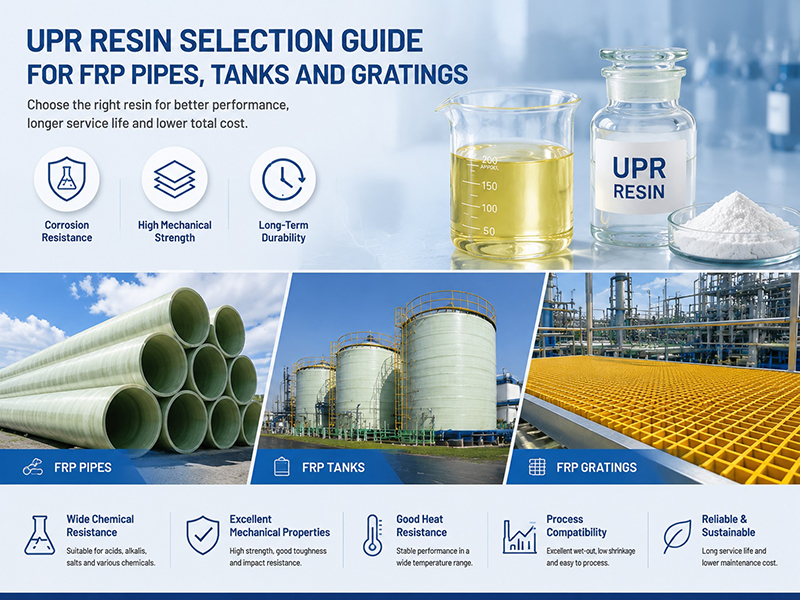
Selecting the right UPR resin is essential for manufacturing high-performance FRP pipes, tanks, and gratings. Resin properties such as chemical resistance, mechanical strength, curing behavior, and processing compatibility directly affect product durability and production efficiency. This guide explains how to choose suitable unsaturated polyester resin systems for different FRP applications. As an experienced China UPR resin manufacturer, ZhongTritium provides customized resin solutions and technical support to help composite manufacturers improve quality, reduce defects, and achieve reliable long-term performance.
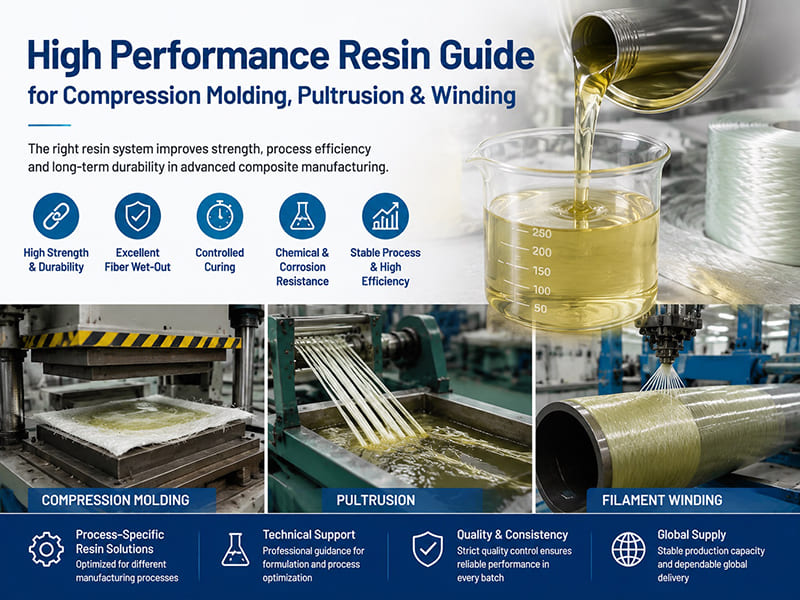
High performance resins play a critical role in compression molding, pultrusion, and filament winding processes. Resin selection directly affects mechanical strength, fiber wet-out, curing speed, and final product durability. Different composite manufacturing methods require specific resin properties to achieve optimal efficiency and quality. This guide explains how to choose suitable resin systems for industrial FRP applications, helping manufacturers improve productivity, reduce defects, and enhance structural performance. As a professional China UPR resin manufacturer, ZhongTritium provides customized resin solutions and technical support for advanced composite manufacturing processes.
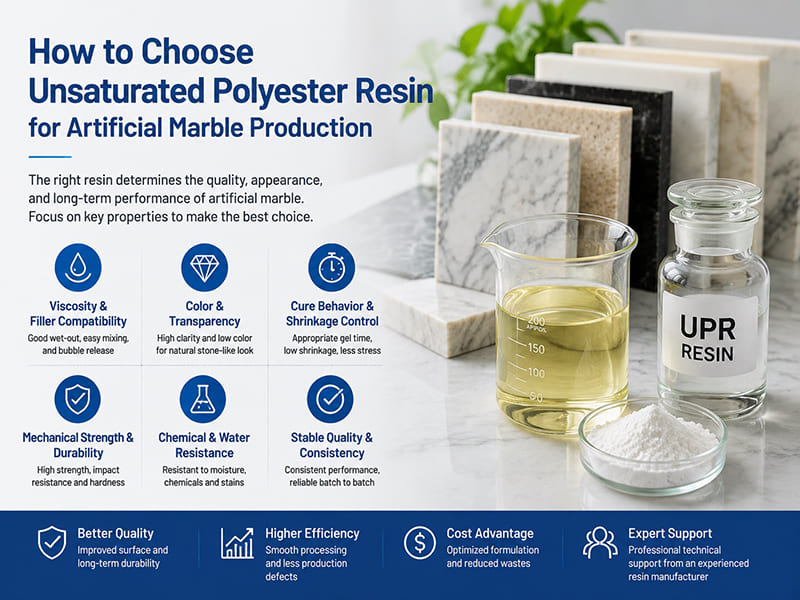
Selecting the right unsaturated polyester resin is essential for producing high-quality artificial marble products. Resin properties such as viscosity, transparency, curing behavior, shrinkage control, and mechanical strength directly influence production efficiency, surface appearance, and long-term durability. Different manufacturing methods and filler systems require specific resin characteristics to achieve optimal results. This guide explains the key factors manufacturers should consider when choosing polyester resin for artificial marble, cultured marble, and engineered stone applications. As an experienced China UPR resin manufacturer, ZhongTritium provides customized resin solutions and technical support to help customers improve product quality, reduce defects, and achieve stable production performance.
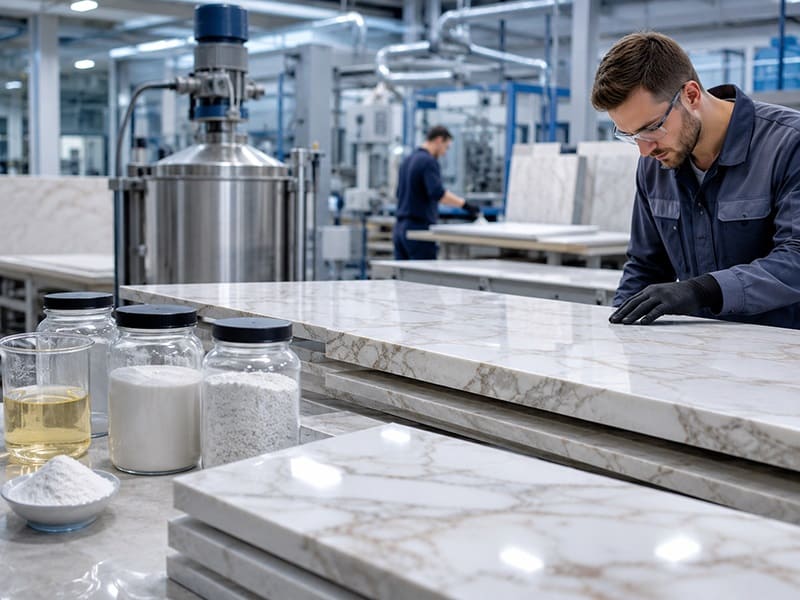
Faux marble is usually made from mineral fillers, pigments, additives, and unsaturated polyester resin. Learn how resin selection affects artificial marble quality, curing, appearance, and production stability.
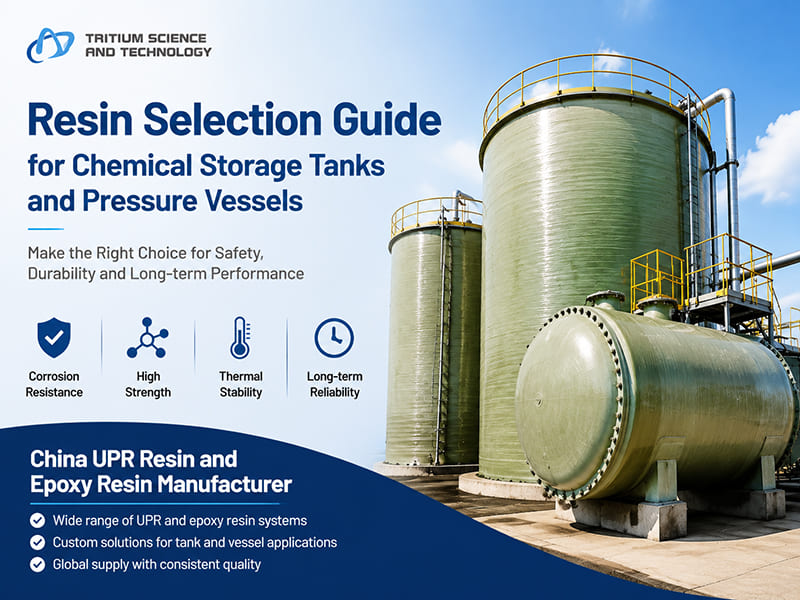
Selecting the right resin is essential for chemical tanks and pressure vessels. Working with a reliable China UPR resin manufacturer or China epoxy resin manufacturer ensures optimal chemical resistance, mechanical strength, and durability. This guide explains key resin properties, applications, and process considerations for FRP manufacturing.
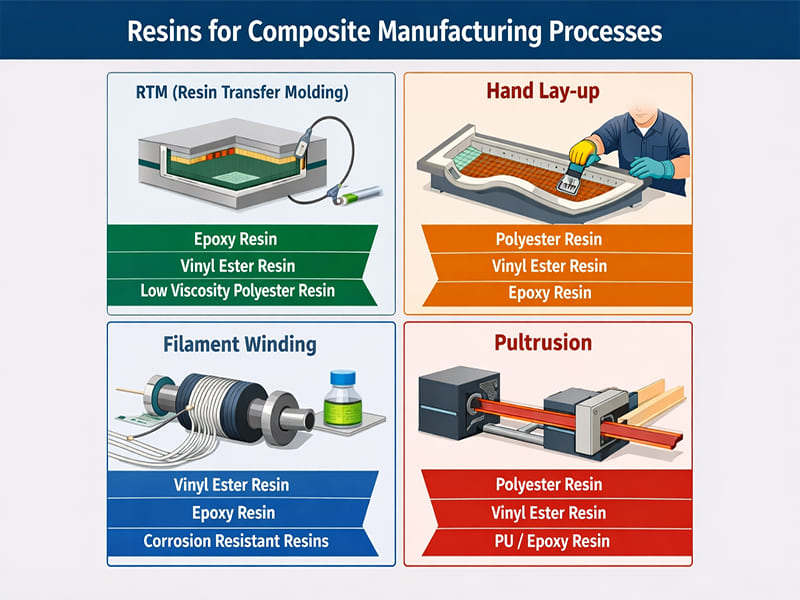
Selecting the right resin is essential for achieving optimal performance in composite manufacturing. Different processes such as RTM, hand lay-up, filament winding, and pultrusion require specific resin properties, including viscosity, curing behavior, and mechanical strength. This guide explains how resin systems like unsaturated polyester, vinyl ester, and epoxy are matched to each process to ensure efficient production, high-quality results, and long-term durability across various industrial applications.
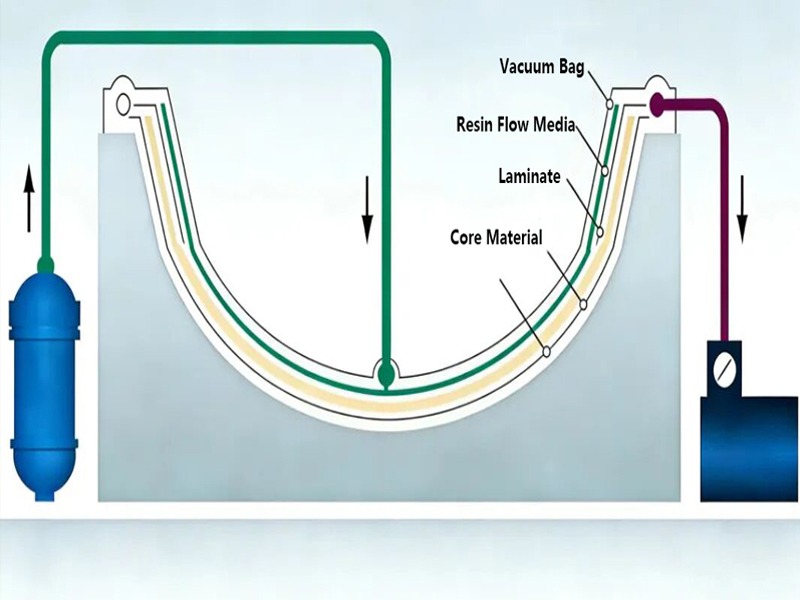
Vacuum infusion is one of the most advanced composite manufacturing technologies used to produce lightweight, high-strength, and environmentally friendly fiber-reinforced structures. By drawing resin through dry fiber reinforcements under vacuum pressure, the process achieves excellent fiber wet-out, high fiber volume ratios, and minimal void content. Vacuum infusion is widely used in industries such as wind energy, marine vessels, aerospace, and automotive manufacturing where large, complex, and high-performance composite components are required.