
Industry Shift Toward Durable Storage Solutions
In chemical processing, environmental protection, and industrial storage, the reliability of storage tanks is critical. Steel tanks have traditionally been the standard, but in corrosive conditions, their limitations—such as susceptibility to chemical attack and coating failure—have become apparent. Fiber Reinforced Plastic (FRP) tanks are increasingly adopted as a more reliable and cost-effective alternative.
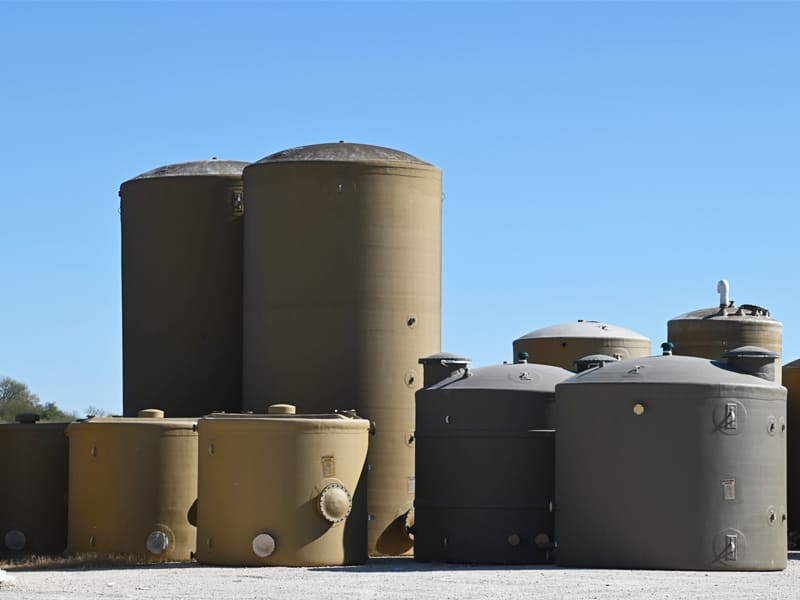
Built-In Corrosion Resistance
Corrosion is the main factor driving the adoption of FRP tanks. Unlike steel, which depends on coatings or linings that can degrade over time, FRP tanks are manufactured with inherently corrosion-resistant resins such as vinyl ester and unsaturated polyester. This inherent chemical resistance ensures long-term durability even under aggressive acids, alkalis, and salts.
Lower Lifecycle Cost and Maintenance Needs
Maintenance and lifecycle cost are critical considerations. Steel tanks often require frequent inspections, recoating, and repair, which increases downtime and operating expenses. FRP tanks, being resistant to rust and electrochemical corrosion, significantly reduce maintenance needs, making them more cost-efficient over their service life.
Lightweight and Efficient Installation
FRP tanks provide a high strength-to-weight ratio, allowing them to meet mechanical requirements while remaining much lighter than steel tanks of similar capacity. This reduces transportation and installation complexity, and in many cases, also lowers foundation and construction costs.
Design Flexibility for Specific Applications
One of the key advantages of FRP tanks is the ability to customize the laminate structure. Wall thickness, fiber orientation, and corrosion barrier composition can all be engineered to match specific chemical, temperature, and pressure conditions, offering application-specific performance that steel tanks cannot easily achieve.
Improved Safety and Environmental Performance
FRP tanks reduce the risks associated with corrosion-related leaks and spills. Their seamless construction and stable chemical resistance help protect personnel, equipment, and the environment. Many modern FRP resins also comply with low-VOC and environmental regulations, supporting sustainable industrial operations.
A Proven Solution for Corrosive Environments
Advancements in resin technology and composite engineering have made FRP tanks a reliable replacement for steel tanks in challenging chemical environments. Their adoption reflects an industry trend toward materials that combine durability, safety, and cost efficiency.
Interested in High-Quality FRP Tanks?
If your operations require reliable chemical storage solutions, ZhongTritium provides FRP tanks designed for optimal corrosion resistance and long-term performance. Contact us today to discuss your specific application requirements.